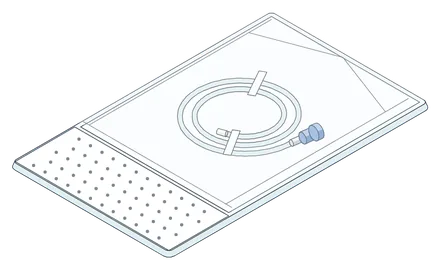
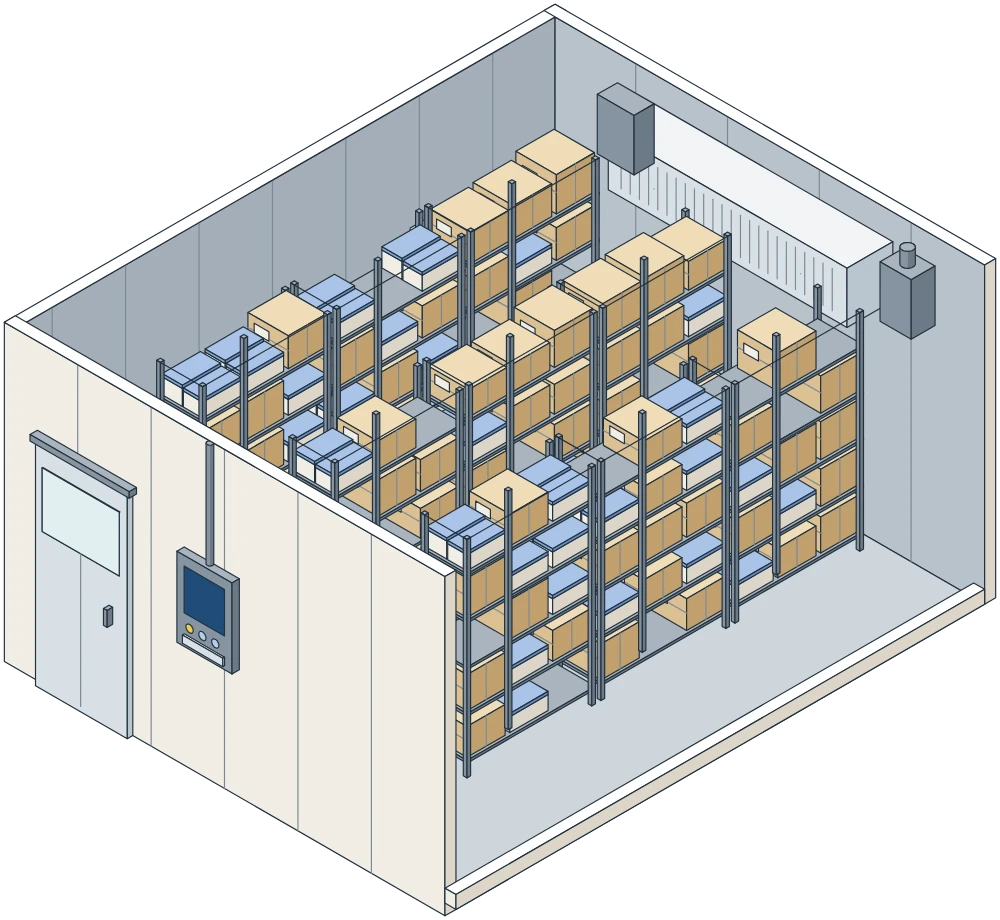
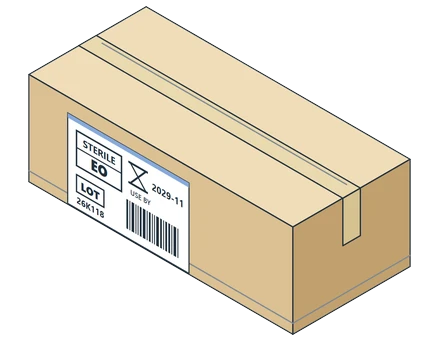
The sterility assurance program, from design to the patient for the people who run it
A comprehensive sterility assurance course to help you on your path to master sterility. It covers EO, radiation, moist heat, dry heat and depyrogenation, VH2O2 and newer modalities, plus aseptic processing, for medical devices and sterile drug products.
Every step: designed, sourced, made, packed, proven, sterilized in its package, stored and shipped, and followed after release. Then how to manage the whole sterility assurance program.
Where do you want to start?
Pick one and we will take you to your path.
Who it is for
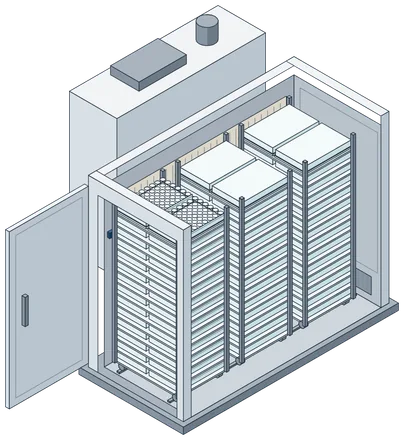
Sterility assuranceStaff at medical device and sterile drug makers, contract sterilizers and test labs.
Quality and regulatoryQA and RA staff who review sterilization records, filings and supplier work.
Written for industry, not for hospital sterile processing.
From design to the patient
Every step: designed, sourced, made, packed, proven, sterilized in its package, stored and shipped, and followed after release. Then how to manage the whole sterility assurance program.
Foundations
First the language and the science: the history of sterility assurance, its words, then lethality, the SAL and the micro lab.
0A A history of sterility assurance, and how the course works0B The words of sterility assurance1A Microbes, lethality and the SAL (free preview)1B The microbiology lab
DESIGN IT
Part 2 Designing for sterility
1 module ·11 lessons ·2 h 13 min of video
Sterility starts in design: what the product and its package must meet, and how to choose the modality.
2A Designing for sterility and choosing the modality
SOURCE IT
Part 3 Suppliers and materials
1 module ·10 lessons ·2 h 5 min of video
The suppliers it depends on, and the materials it is made from.
3A Suppliers and materials
MAKE IT
Part 4 Manufacturing environment and bioburden
1 module ·16 lessons ·3 h 14 min of video
Made in a controlled environment, with its bioburden kept under control.
4A Manufacturing environment and bioburden control
PROVE IT
Part 5 The process lifecycle
5 modules ·32 lessons ·7 h 7 min of video
Define the process, validate it, control and release each lot, keep it valid, and handle nonconformances and deviations. Each modality Part builds on it.
5A Defining the process5B Validation5C Routine control and release5D Keeping the process valid5E Nonconformances, deviations and investigations (free preview)
It builds on Part 1: lethality, the SAL and the micro lab.
STERILIZE IT
Part 6 The modalities
seven modality Parts ·55 modules ·292 lessons ·63 h 38 min of video
Then one Part for each sterilization modality, and one for aseptic processing.
6EEthylene oxide8 modules · 46 lessons · 10 h 2 min of video
6RRadiation8 modules · 45 lessons · 9 h 43 min of video
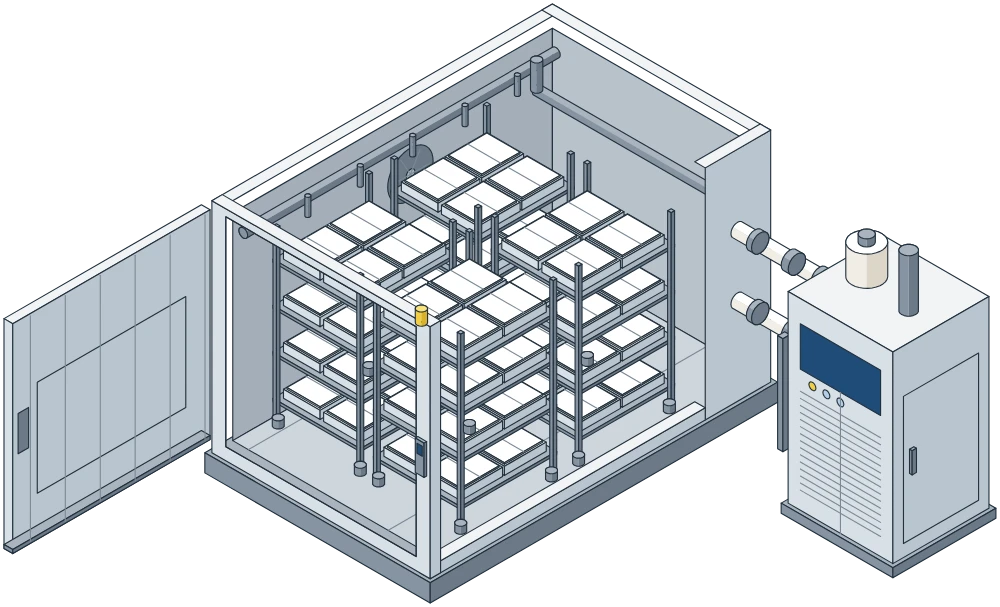
6SMoist heat11 modules · 56 lessons · 12 h 6 min of video
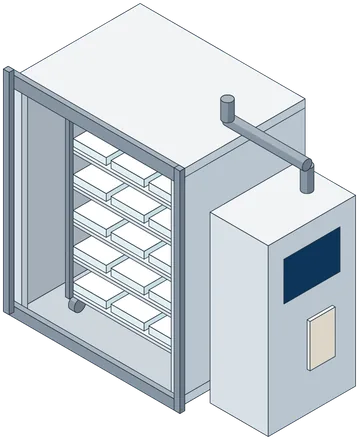
6DDry heat and depyrogenation5 modules · 29 lessons · 6 h 16 min of video
6VVH2O25 modules · 29 lessons · 6 h 21 min of video
6NOther and newer modalities8 modules · 34 lessons · 7 h 36 min of video
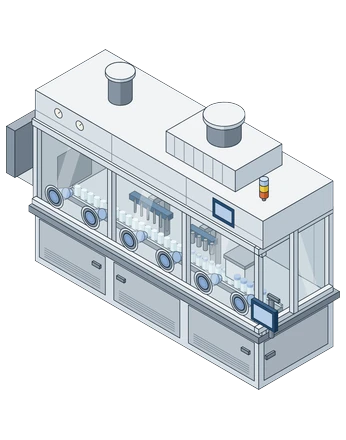
6AAseptic processing10 modules · 53 lessons · 11 h 34 min of video
The worked case in every modality
Each modality has worked modules that follow one load, lot or batch from start to finish.
PACK AND STORE IT
Part 7 Packaging, storage and shelf life
1 module ·9 lessons ·1 h 54 min of video
The sterile barrier system it is sterilized in, its storage and distribution, and its shelf life.
7A Packaging, storage, distribution and shelf life
DELIVER IT
Part 8 After release
1 module ·6 lessons ·1 h 10 min of video
At the customer and the patient: what happens after release, and what comes back.
8A The customer and post-market
RUN IT
Part 9 Managing the sterility assurance program
5 modules ·41 lessons ·9 h 7 min of video
Running the whole program: the quality system, filings and inspections, management review and the micro lab, the statistics behind it, and the sterility rules for drugs, devices and combination products across markets.
9A The quality system and oversight9B Management review, the micro lab and remediation9C Statistics and data for sterility assurance9D Drug, device and combination-product sterility rules9E Sterility rules across markets
Each path ends with practice questions and timed practice tests.
Calculate lethality and show how a process reaches its SAL.Survivor curves, D-, z- and F-values, the SAL, and the overkill, bioburden-based and combined approaches.
Part 1, module 1A, free in the preview: microbes, spores and resistance; survivor curves, D-value and log reduction; what an SAL of 10-6 means; z-value, F-value and equivalent time; the three approaches; biological and chemical indicators.
Read and challenge micro lab results.Bioburden with its recovery correction, tests of sterility, BI resistance, endotoxin, and counts at or near zero.
Module 1B: bioburden counting and correcting; tests of sterility; measuring BI resistance, including fraction-negative methods; validating the micro methods; endotoxin tests and pyrogens they miss; sterility-test isolators; rapid microbiological methods; reading all-zero bioburden data.
Design a product and its package for sterility, and choose the modality.Set the sterility requirements in R&D, compare every modality, pick and defend the worst case, and plan design transfer.
Module 2A: requirements and design; every modality compared; inside the plants; choosing the modality and its regulatory path; product families, worst case and sample item portions; what the process does to the product and to biocompatibility; kits with pre-sterilized parts; combination products.
Qualify and oversee suppliers, contract sterilizers and test labs.Audit them, triage their change notices, and check BIs, dosimeters and sterilant gas when they arrive.
Module 3A: what the program needs from suppliers; choosing, auditing and overseeing contract sterilizers and labs; incoming checks; change notices and scorecards; master files and letters of authorization; supplier case calls.
Keep bioburden and the manufacturing environment under control.Cleanrooms, environmental monitoring, water and gases, bioburden alert and action levels, cleaning validation and biofilm.
Module 4A: cleanrooms and EM for device assembly; gowning and cleaning; utilities; reading trend data; the bioburden program; endotoxin control; cleaning validation and disinfectant efficacy; cleaning the finished device; biofilm; when the microbial challenge changes.
Define a process that operators can run and validation can prove.What the product definition must settle, process parameters and tolerances, and the equipment specification, calibration and maintenance.
Module 5A, shared by every modality: the product definition; parameters and tolerances; equipment specification, calibration and maintenance; a process defined end to end, worked. All access adds measurement uncertainty and data integrity.
Write and judge IQ, OQ and PQ.Protocols and acceptance criteria, where the monitors go, half and fractional cycles, dose maps, residuals, and 95/95 sample sizes.
Module 5B: IQ, OQ and PQ for each modality; protocols and reports; monitor placement; microbiological PQ; product function and residuals; reading validation results; sample sizes and capability.
Release product with the record behind you.Routine acceptance criteria and record review, the release decision, and keeping processed and unprocessed product apart.
Module 5C: procedures and calibration before use; routine acceptance criteria and record review; the release decision; keeping processed and unprocessed product apart; release and nonconformance. BI, parametric and dosimetric release are taught in each modality Part. All access adds lots and loads that split or merge.
Keep a validated process valid.Change impact assessments, adopting products into a validated process, and requalification.
Module 5D: change control; product adoption and process equivalence; requalification; sterility complaints and process anomalies; change and requalification case calls. All access adds supply disruption and a backup site.
Take a deviation from the first day to a report an auditor accepts.Containment and scope, a real root cause, disposition, CAPA and the investigation report.
Module 5E, free in the preview: nonconformance, deviation and out of specification; the first day; investigating to a real cause; use as is, rework or scrap; from nonconformance to CAPA; writing the investigation report.
Validate and run your modality.EO, radiation, moist heat or aseptic processing, each with its own deviations, and one load, lot or batch followed from start to finish.
EO (6E): the agent and the plant, product and cycle, validation, routine release and keeping EO valid. Radiation (6R): how it kills, dosimetry, dose setting and dose mapping. Moist heat (6S): steam physics, sterilizers and cycles, validation, hospital and reusable-device steam, and wet packs. Aseptic (6A): rooms, people and monitoring, filtration, barriers and the fill line, media fills and lyophilization. All access adds dry heat and depyrogenation (6D), VH2O2 (6V) and the newer modalities (6N).
Prove the package, its integrity and its shelf life.Sealing validation, seal strength and container closure integrity, accelerated and real-time aging, and distribution testing.
Part 7, module 7A: sterile barrier systems and sealing; package integrity tests; container closure integrity; fluid-path integrity; aging and shelf life; distribution and storage; packaging changes and failures.
Handle what comes back after release.The STERILE claim on the label, complaint trends, field actions and recalls, reusable devices and high-level disinfection.
Part 8, module 8A: labeling, opening and aseptic presentation; reusable devices; field actions, recalls and post-market surveillance; closing the loop to design; high-level disinfection.
Run the sterility assurance program and defend it.Submissions and change filings, FDA inspections and 483s, CAPA, risk files, management review, and statistics you can defend.
Part 9: regulations, submissions, inspections and audits, CAPA and risk management (9A); management review, the micro lab and remediation (9B); control charts, capability and reliability, and analyses you can defend (9C).
Watch, explore, practice
Watch
The lesson video
About 12 min. 15 min for lessons where a calculation or a call on a case is worked on screen.
Explore
The page after it
About 5 min, 10 after a worked lesson. A diagram, slider, calculator or case to try.
Practice
The module quiz
Tenets modules: 15 questions in 20 min. Other modules: 12 in 15 min.
Learning paths
Start with the Tenets, add the modality you run, or take every lesson. Each option is self-paced, with 12 months of access.
Add a modality later$400 for each modality path you add to the Tenets you already own. Two modality paths come to $2,200, the price of all access.
30 days to ask for a refundWe refund you if the lessons you have opened add up to 4 hours of video or less. Refund policy.
Buying for a team?Team pricing is arranged by email. See team seats.
Every Part and module. 450+ lessons.
0History, and how the course works2 modulesPart 0 modules
0AA history of sterility assurance, and how the course works
0BThe words of sterility assurance
1Lethality, the SAL and the micro lab2 modulesPart 1 modules
1AMicrobes, lethality and the SAL free preview
1BThe microbiology lab
2Designing for sterility1 modulePart 2 modules
2ADesigning for sterility and choosing the modality
3Suppliers and materials1 modulePart 3 modules
3ASuppliers and materials
4Manufacturing environment and bioburden1 modulePart 4 modules
4AManufacturing environment and bioburden control
5The process lifecycle5 modulesPart 5 modules
5ADefining the process
5BValidation
5CRoutine control and release
5DKeeping the process valid
5ENonconformances, deviations and investigations free preview
6EEOEthylene oxide8 modulesPart 6E modules
6E1The agent and the plant7 lessons
6E2Defining product and cycle9 lessons
6E3Validation6 lessons
6E4Routine monitoring and release3 lessons
6E5Keeping EO valid3 lessons
6E6EO nonconformances and deviations4 lessons
6E7The EO load's path 1: plant to preconditioning5 lessons
6E8The EO load's path 2: preconditioning to patient9 lessons
6RRadiationGamma, e-beam and X-ray8 modulesPart 6R modules
6R1How it kills, sources and dosimetry8 lessons
6R2Product and dose setting8 lessons
6R3Validation and dose mapping7 lessons
6R4Routine monitoring and release2 lessons
6R5Keeping the dose valid5 lessons
6R6Radiation nonconformances and deviations4 lessons
6R7The lot's path 1: plant to irradiator carriers5 lessons
6R8The lot's path 2: irradiator to patient6 lessons
6SMoist heatIndustrial, plus two modules on hospital steam and reusable devices11 modulesPart 6S modules
6S1Steam physics3 lessons
6S2Sterilizers and cycles6 lessons
6S3Defining product and cycle6 lessons
6S4Validation6 lessons
6S5Routine monitoring and release2 lessons
6S6Keeping moist heat valid1 lesson
6S7Hospital and reusable-device steam10 lessons
6S8Drying, cooling and wet packs4 lessons
6S9Moist heat nonconformances and deviations4 lessons
6S10The industrial batch's path8 lessons
6S11The hospital set's path6 lessons
6DDry heatDry heat and depyrogenation5 modulesPart 6D modules
6D1Dry heat sterilization6 lessons
6D2Depyrogenation7 lessons
6D3Dry heat and depyrogenation deviations2 lessons
6A8The aseptic batch's path 1: materials to filled vial7 lessons
6A9The aseptic batch's path 2: filled vial to patient5 lessons
6A10Lyophilization5 lessons
7Packaging, storage and shelf life1 modulePart 7 modules
7APackaging, storage, distribution and shelf life
8After release1 modulePart 8 modules
8AThe customer and post-market
9Managing the sterility assurance program5 modulesPart 9 modules
9AThe quality system and oversight
9BManagement review, the micro lab and remediation
9CStatistics and data for sterility assurance
9DDrug, device and combination-product sterility rules
9ESterility rules across markets
10PracticeDrills, flashcards & timed testsPart 10 practice
Practice for the Tenets, EO, radiation and moist heat: calculation drills, a formula and common-errors sheet, flashcards, a halfway mixed set and timed practice tests.
Questions
Is there a free preview?
Yes. Modules 1A and 5E are free to try, plus the free 20-question starting check. See the free preview.
I already know the Tenets. What do I take?
Modality bridge, $900: one modality path on its own, 12 months, for people who already know the Tenets.
Can I add a modality path later?
Yes. Add a modality path, $400, to the Tenets you already own.
How long do I have?
The course is self-paced, with 12 months' access.
Can I get a refund?
You can ask for a refund within 30 days of purchase. We refund you if the lessons you have opened add up to 4 hours of video or less. See the refund policy.
Does the course end with a graded test?
No. Quizzes are practice.
What do the times mean?
Video times are lesson video only. All access comes to 200+ hours of content: the video plus explore pages, quizzes, flashcards and practice.
Is there practice material?
Yes: calculation drills (Tenets 10, EO 5, radiation 6, moist heat 9), a formula and common-errors sheet, flashcards and a halfway mixed set.
Is it for hospital sterile processing?
No. It is written for industry. Moist heat has two modules on hospital steam and reusable devices (16 of its 56 lessons), and VH2O2 has one on the hospital VH2O2 load (5 lessons).